
On April 13, 2026, the waning Moon in Pisces draws attention to what drains quietly and what restores without spectacle: the unanswered feeling, the overfull schedule, the relief of a silent room. This piece follows those subtle signals and the kind of completion that begins with listening before letting go.
What the waning Moon in Pisces brings into focus
The light is thinning, and that changes the way things ask to be seen. Under a waning Moon in Pisces, what comes forward is rarely loud. It is the damp edge of a thought while washing a cup. The sudden heaviness in the shoulders after answering one message too many. The relief that arrives when the house grows quiet and you can hear the kettle, the rain against the window, your own breath returning to a slower tide.
Pisces does not sort life into neat stacks. It blurs, softens, remembers. In this part of the lunar cycle, that softness is not confusion but instruction. What is unfinished may not need more force; it may need listening. The day favors a gentler kind of discernment: noticing what has already ripened enough to be released, what has been carried past its season, what the body has been signaling before the mind has found words for it.
Water teaches by contact. If emotion rises easily now, it helps to bring it into the realm of the tangible. Run warm water over your hands for a full minute. Sweep one neglected corner of a room. Fold the blanket on the chair instead of stepping around it again. Small acts of order can hold feelings without hardening them. They say, quietly, I am here, and I can tend what is here.
The waning phase is often misunderstood as emptying for its own sake. It is more exact than that. It asks for cleansing that makes room for truth, not performance. If your thoughts feel misted over, do not demand clarity all at once. Choose one thing that is complete enough to close: a note you can send, a pile of papers you can tie and put away, a promise you can honestly revise. The moon recedes, and in that receding, outlines begin to return.
The quieter face of completion
There are days when ending something feels triumphant, like a door closing with certainty. This is not one of them. The tone here is softer, almost tidal. Completion may look like admitting that a conversation has given all it can for now. It may be deciding to stop revisiting an old regret while chopping herbs for supper, or putting the pen down before the page grows crowded with explanations you no longer need.
That matters because the waning Moon does not reward excess effort. It favors the honest finish over the perfect one. Pisces adds compassion, but also drift; without a gentle anchor, you can spend the day floating between memory and anticipation. The remedy is simple and unspectacular: bring one ending into the body.
Try this thread for the day. Choose a single loose strand that has been quietly asking to be gathered. Not five, not a grand reset. One. Then move with it in order:
- Name it in plain words on paper: “I need to finish sorting the bedside drawer,” or “I need to answer this message and stop rehearsing it.”
- Set a boundary around the task. Fifteen or twenty minutes is enough.
- When it is done, mark the ending physically: close the drawer, wash the cup, blow out the candle, open the window for a breath of air.
These gestures seem modest, yet they teach the nervous system that an ending can be safe. Completion is not only a mental decision. It becomes believable when the hands participate. The room looks slightly clearer. The chest loosens. The mind stops circling the same branch.
If you work well with stones, a small moonstone or amethyst beside you can be useful here, not as decoration but as a reminder to stay receptive rather than forceful. Touch it when you are tempted to overdo, and return to the one thing you chose. That is enough for this day.
Jasmine for steadiness and return
Jasmine suits this kind of evening because its sweetness does not rush. It opens slowly in the air, white and almost luminous, and asks the breath to lengthen. When feelings are diffuse or the day has left too many impressions clinging to the skin, that soft floral note can help gather the senses back into one place.
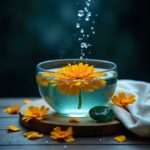
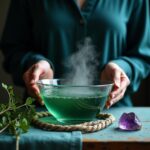
A simple gesture is enough. Place a cup of jasmine tea beside you at dusk, or if you have a safe floral infusion or a drop of jasmine hydrosol on a cloth, bring it near rather than making a ceremony of it. Hold the warm cup with both hands. Before drinking, pause long enough to notice the first thread of fragrance. Not to analyze it. Just to receive it. Then ask yourself one grounded question: What can be laid down tonight without harm?
That question works well with jasmine because the plant’s perfume is often associated with tenderness, but tenderness is not indulgence. It can be precise. It can help you release what is overstimulating the heart without turning away from what is true. A single sip, a single exhale, a single decision: the laundry can wait, the draft is finished enough, the apology has been offered, the rest belongs to tomorrow.
If you want one more practical step, place the cup near an open window or step briefly onto a threshold after drinking. Let cooler air meet the lingering warmth in your hands. This contrast helps the body register transition. Something is ending; something else is being prepared in silence.
Always use herbs mindfully and check for any personal contraindications. With jasmine, gentleness is the point. A little is often more than enough.
Moonstone: presence, touch, and grounded listening
The falling light of this moon does not ask for grand decisions. It asks for a quieter kind of honesty: to notice what is already ending, what has given all it can, and what is ready to be laid down with tenderness rather than regret. A small moonstone can help here, not as an ornament of mystery, but as a cool weight in the palm that slows the mind enough for the body to speak first.
Hold it for a few breaths before you begin anything else. Its surface often feels like river-smoothed bone, pale and softly luminous, like water holding the memory of moonlight. That touch matters. On a day shaped by Pisces and the waning tide, feelings can spread like mist unless they are given a place to rest. The hand, the breath, the chair beneath you, the floor under your feet: these are the simple borders that allow emotion to become understandable instead of overwhelming.
If there is something unfinished in your heart, do not rush to name it beautifully. Ask a plainer question: what am I still carrying that is already over? Sometimes the answer arrives as an image rather than a sentence—the sweater you still keep by the door for someone who no longer visits, the message draft you reopen each evening, the tired promise to yourself that no longer fits the life you are actually living. This is where the theme of completion becomes useful. Not as a dramatic ending, but as a soft closing of the hand around what is true.
A brief practice is enough. Sit with the moonstone in one hand and the other over your lower ribs or belly. Breathe slowly and listen for three things: where the body tightens, where it softens, and what thought repeats itself. The repetition is often the doorway. If tears come, let them be ordinary. If nothing comes, that too is information. The waning moon often works by subtraction; silence may be the first sign that something has finally stopped demanding your attention.
A candle with a ring of herbs
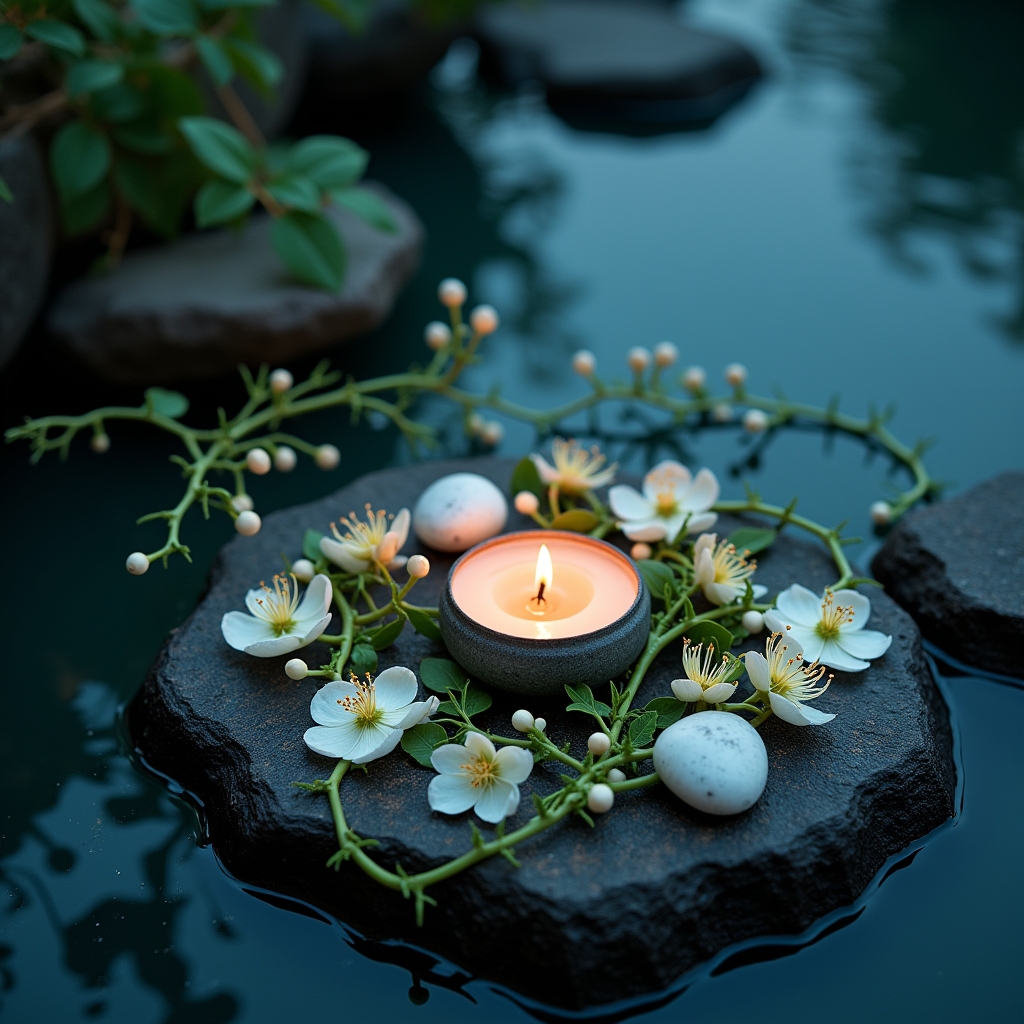
Once you have heard what is ready to be closed, give it a visible form. A single candle on a plate or shallow bowl is enough. Around it, make a loose ring of dried herbs with a calm hand, not a decorative one. The circle is not there to impress the eye; it marks a boundary. It says: this thought, this grief, this lingering attachment has a place, and it does not need to spill into every corner of the evening.
For this kind of moon, jasmine is especially fitting. Its fragrance carries both sweetness and dusk, and that doubleness is useful when something is ending. Jasmine does not smell like a clean blank page. It smells like memory warmed by night air, like a garden still breathing after sunset. A few dried jasmine flowers in the ring can remind you that release is not always sharp. Sometimes it is fragrant, aching, and gentle all at once.
You might add a little rosemary for clarity or a pinch of lavender for quiet, but restraint serves better than abundance. Leave space between the herbs so the ring looks breathable, like a wreath left open to the wind. Always use herbs mindfully and check for any personal contraindications. Keep all plant material well away from the flame, and place the candle on a stable, heat-safe surface.
When the candle is lit, do one practical thing beside it. Fold a note you no longer need to keep visible. Put away an object linked to a finished chapter. Cross one stale obligation off your list instead of copying it onto tomorrow’s page again. Fire helps attention gather, but the act beside the flame is what teaches the nervous system that an ending can be real. The herbs hold the mood; your hands complete the sentence.
Bringing this atmosphere into daily life without forcing it
Not every closing needs a ritual table. Some are better carried into the ordinary fabric of the day, where they can settle naturally. The most faithful way to honor this waning phase is to reduce excess pressure. Wash one cup instead of tackling the whole kitchen. Answer the message you have avoided, if it truly needs answering, and leave the rest. Comb your hair more slowly. Open a window for five minutes and let the cool air move through a room that has felt close and overfull.
Water is the quiet teacher here. Drink a glass slowly enough to taste it. Rinse your hands and notice whether your shoulders drop. If the mind keeps circling old material, take that as a sign to simplify the next hour rather than to analyze harder. Completion under a watery moon often arrives through care of the body first, understanding second. Once the body feels less braced, truth tends to stop hiding.
Jasmine can return in a very modest way. A drop of jasmine scent on a scarf, a cup of jasmine tea if it suits you, or simply the memory of its dusk-blooming softness can become a reminder not to tug at endings before they are ready. The point is not to create a mood that lasts all day. It is to keep a thread of gentleness running through your choices, so that what is finishing can finish cleanly.
By evening, look around for one sign that something has already shifted. Perhaps the room is less cluttered, perhaps your chest feels less crowded, perhaps one old thought has lost its sharp edge. That is enough. The waning moon does not reward force. It favors the person who listens, tidies, releases, and trusts the dark soil to do its hidden work before anything new asks to bloom.