
On April 14, 2026, the waning Moon in Pisces turns leadership away from performance and toward quiet discernment: the half-finished task, the blurred boundary, the promise made from fatigue. This piece follows those small signs and asks what must be released so your guidance can become steadier, clearer, and more humane.
What the waning Moon in Pisces asks you to notice
Morning light falls softly on the windowsill, and even the glass seems quieter than usual. A cup left half full, a notebook still open from yesterday, the faint scent of rain caught in a coat sleeve: small things ask to be seen before anything new begins. This is how the waning Moon often speaks. Not with announcement, but with subtraction. It lowers the volume so that what has been leaking, tiring, or blurring the edges of your discernment can finally come into focus.
In Pisces, that softening reaches the emotional body first. Boundaries become porous. Compassion deepens, but so can confusion when everything is allowed to enter unchecked. For anyone holding responsibility for others, this matters. Guidance is not only the ability to inspire; it is also the ability to sense when empathy has become overextension. The wiser posture today is less about pushing a vision forward and more about noticing where your attention has been dissolving into noise, rescue, or quiet avoidance.
The season adds its own counsel. Spring is often praised for its budding force, yet some of its most important work happens underground and in the damp places near the roots. Rebirth is not always bright at first. Sometimes it arrives as a clear refusal: one less promise made from guilt, one conversation no longer postponed, one habit of self-erasure named honestly. The Moon’s decline supports this kind of cleansing. It favors listening before declaring, rinsing before filling, resting before the next threshold opens.
If the day feels watery, do not rush to harden yourself. Instead, give shape to what you feel. Wipe the table. Open a window. Pour out stale water from a vase and replace it. These are modest acts, but they teach the body what the psyche needs: release, freshness, a cleaner vessel. When intuition is protected by simple order, it becomes far easier to recognize what is truly yours to carry.
Mars gives the day its sharper edge
A soft day does not have to be a weak one. Beneath the Moon’s retreat, Mars adds a firmer pulse, like a boot pressing into wet earth to test where the ground will hold. This is where authority becomes interesting: not loud, not theatrical, but brave enough to name a fear without kneeling to it.
There is a form of strength that belongs especially to water: it does not always confront head-on, yet it reshapes stone over time. Applied to responsibility, this can look like choosing candor over performance. If you are guiding a team, a household, a creative effort, or simply your own next decision, the question is not how to appear certain. The question is where courage can be made tangible. Sometimes that means setting a limit with kindness. Sometimes it means admitting that a plan needs revision. Sometimes it means protecting a fragile idea long enough for it to root.
Mars here is useful when it serves devotion rather than agitation. Watch for the difference. Agitation is restless, eager to prove, quick to react. Devotion is steadier. It gathers itself. It acts after listening. The most mature expression of command on a day like this is not domination but containment: holding the emotional weather without becoming ruled by it.
A practical way to work with this tone is to choose one unresolved fear and bring it down to scale. Write it in a single sentence. Then answer it with one concrete action before dusk. Make the phone call. Clarify the expectation. Cancel what you already know is misaligned. When courage enters the body through one specific deed, the mind stops spinning stories around what might happen.
If a stone helps you remember this, black tourmaline can be meaningful here, not as decoration but as a tactile reminder of steadiness. Kept in a pocket or placed beside a written intention, it can mark the difference between absorbing every current around you and standing in your own clear outline.
Vervain for balance, without excess
Vervain has long been associated with clarity, consecration, and the kind of focused calm that arrives after emotional overstimulation. Its medicine, in symbolic terms, suits those who care intensely and sometimes burn too hot in that care. On a day shaped by sensitivity and courage together, it offers a gentle reminder: conviction does not need fever to be true.
There is something beautifully plain about a sprig of vervain on a table. Fine stems, small flowers, no dramatic display. Yet it carries a quiet precision. For someone carrying responsibility, that image is useful. Real authority often looks more like consistency than grandeur. It is the hand that returns the chair to its place, the voice that lowers instead of rising, the decision that restores proportion.
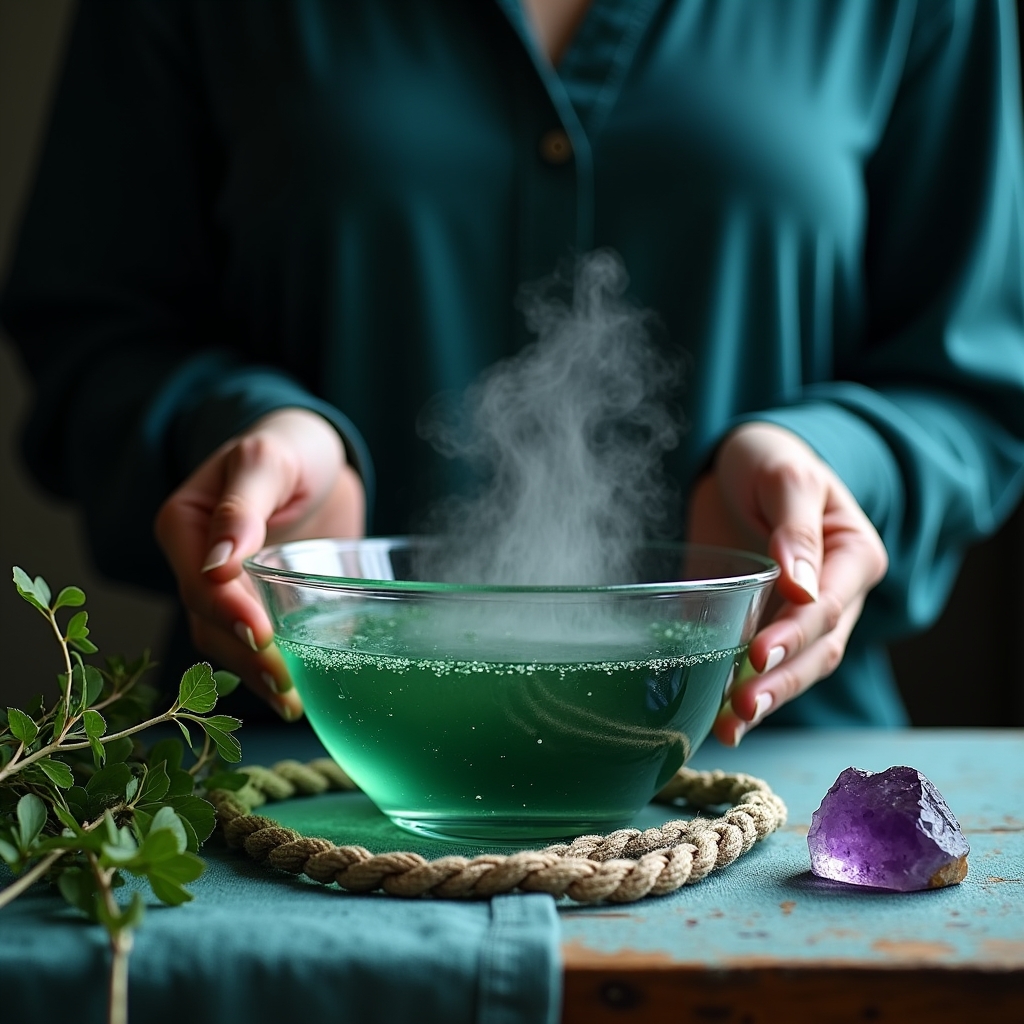
A simple gesture for regaining balance is to prepare a brief pause around the herb rather than asking it to do too much. Place a small bundle of dried vervain or a cup of vervain tea near an open window in the late afternoon. Sit for a few minutes without reading or reaching for distraction. Notice three things that have become too much, and one thing that deserves your remaining strength. Then close the practice by rinsing your hands in cool water. The sequence matters: naming excess, choosing what stays, letting the body register release.
Vervain tea can be part of this quiet reset if it is suitable for you, especially when the mind feels overextended by duty or emotional strain. Keep the cup plain and the pace unhurried. Sip while the steam touches your face, and check for any personal contraindications before working with the herb.
By evening, the aim is not perfection. It is a cleaner inner room. Less static. Less compulsion. Enough space for discernment to return, and with it, a steadier way of leading what is yours to lead.
Amethyst: presence, touch, and grounded listening
The hand reaches for an object before the mind has finished naming its need. On a day like this, when the moon thins and the air carries that soft, rinsed feeling of spring rain, amethyst can serve less as ornament and more as a pause made visible. Its violet holds dusk and depth together. Not command, not display—simply a way of remembering that steadiness begins in the body.
When questions of guidance rise—how to respond, where to draw a line, when to speak and when to remain still—it helps to notice what happens in the palm. A cool stone asks for slower attention. The breath lengthens. The shoulders loosen a fraction. This is often where true authority first appears: not in volume, but in the ability to listen without being swept away by every passing current.
The waning moon favors this kind of refinement. It does not ask for grand declarations. It asks what can be cleared so perception becomes cleaner. Pisces, with its tidal sensitivity, can blur edges when neglected, yet Mars adds a necessary ember: the courage to stay present with what is uncomfortable. Amethyst supports that meeting point well. It is meaningful here not because it promises answers, but because it encourages a quieter kind of discernment—feeling deeply without dissolving.
If you keep a small piece nearby, hold it for a few breaths before a conversation that requires both tenderness and backbone. Touch the stone, then touch the table, your sleeve, the wooden frame of a chair. This small sequence matters. It reminds intuition to remain rooted in the ordinary world, where decisions are lived through gestures, timing, and tone.
Elsewhere on the table, vervain belongs naturally beside this reflection. Traditionally linked with clarity, devotion, and the focused will, it can be helpful when the mind is scattered by too many emotional signals. A simple and gentle use is enough: a pinch of dried vervain in a bowl near your journal, or a warm infusion sipped slowly while writing down one truth you have been avoiding. Its bitterness has a teaching in it. Not all clarity arrives sweetly. Check for any personal contraindications before using the herb.
Minimal macramé of the talisman
A talisman does not need excess to carry meaning. One cord, a few deliberate knots, a stone that fits the hand—this is often enough. There is wisdom in making something plain during the moon’s descending arc. What is pared back tends to reveal what is essential.
A minimal macramé setting for amethyst suits the mood of this date: practical, quiet, intimate. Cotton cord in a natural shade keeps the piece close to earth, even when the stone itself suggests twilight and dream. The work is simple enough to make in an evening with a lamp lit low and a window cracked to the coolness of April.
Begin with a length of cord folded in half, securing the top with a loop if you want to wear it, or leaving a longer tail if it will hang near a doorway or rest by a bedside. Tie a few square knots to form a narrow spine. Place the stone at the center and knot around it gradually, testing the hold with your fingers rather than tightening everything at once. The point is not perfection. The point is relationship: cord meeting crystal, hand learning pressure, attention becoming visible.
There is a subtle lesson here for anyone carrying responsibility. Restraint can be a form of care. Too many knots and the talisman becomes rigid. Too few and it slips free. The same is true of guidance offered to others. A steady structure should hold, not suffocate.
If you wish, thread in one tiny dried sprig of vervain above the stone, wrapped lightly and replaced once brittle. Keep it decorative rather than ingesting unknown dried material from craft work. The herb’s old association with clear intention and sacred commitment fits beautifully here, especially when what you are shaping is not merely an object, but a reminder of how you want to lead: with sensitivity that does not lose its center.
Bringing this atmosphere into daily life without forcing it
Not every day asks to be mastered. Some ask to be met with cleaner attention.
The mood of a waning moon can be carried into the kitchen, the doorway, the desk drawer through subtraction. Clear one corner of a desk. Answer one difficult message with fewer explanations and more honesty. Wash a cup by hand and notice the warmth of the water, the sound of it against ceramic, the brief shine left behind. These are modest acts, but they teach the same thing: presence is easier to trust when life is not crowded with unnecessary noise.
This matters especially when others look to you for direction. Water-rich days can stir compassion, memory, and porousness. Useful qualities, all of them, until they turn into overextension. The remedy is not hardness. It is containment. A boundary spoken gently. A pause before agreeing. A willingness to say, I need the evening to think. Such sentences protect intuition from becoming depleted performance.
For a small anchor, place amethyst where your hand naturally lands in the morning. Open a window for three minutes and let stale air leave first. If vervain suits your body and circumstances, brew a cup and drink it without folding laundry, answering messages, or drifting into the next task, as though receiving a quiet instruction from the hedgerow itself. Check for any personal contraindications before using the herb.
By night, there is no need for ceremony elaborate enough to impress anyone. Dim one lamp. Set aside what can wait. Ask a single plain question in your notebook: What can be released so that what is true can lead more cleanly? Then stop. The moon is already doing its patient work above the roofs and branches, thinning toward renewal. You do not have to force the river to move. You only have to stop placing stones in its path.