
On April 12, 2026, the Waning Moon in Aquarius sharpens the air and clears the mind, making old reactions look smaller and truer needs easier to name. This piece follows that cooler light toward power that is less about force and more about choosing what no longer deserves your energy.
What the Waning Moon in Aquarius brings into focus
A window left ajar, a cool thread of air moving the curtain, the house quieter than it was a week ago: this is how the evening reads under a Waning Moon in Aquarius. Not with drama, but with a certain clean distance. Things that seemed urgent begin to show their true size. Words spoken in haste lose some of their heat. The mind, if given a little space, can sort what belongs to habit from what belongs to conviction.
Aquarius often stirs the high rooms of thought: ideals, friendships, shared visions, the way one places oneself within a wider circle. Yet the waning phase does not ask for expansion. It asks for clearing. If there has been noise around your choices, this is a good moment to notice which conversations leave you more honest, and which leave you scattered. There is strength in stepping back from the chorus long enough to hear your own breath.
The kind of authority available here is not loud. It resembles opening a drawer and removing what has no use, one object at a time. A message need not be answered immediately. A plan may be refined by subtraction rather than addition. Even a room can help: crack a window, shake out a cloth, sweep a corner where dust has gathered. Air signs speak through circulation, and clarity often arrives when something stale is allowed to move on.
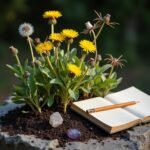
If a crystal has a place beside you tonight, clear quartz suits the mood for one reason only: it does not decorate confusion. Set it near a notebook or on a windowsill as a reminder to simplify rather than intensify. Then write a short sentence you can stand behind. Not ten intentions, not a manifesto. One sentence with clean edges.
Sunlight and the measure of true strength
April light has a way of revealing everything at once. It catches on wet leaves, on forgotten fingerprints across glass, on the first brave shoots lifting from dark soil. Under the spring Sun, vitality is real, but it does not have to become force. There is a difference between pressing forward and standing fully in one’s own center.
The word that asks to be considered is power, though not in its harsher costume. Not domination. Not constant output. Something steadier: the capacity to choose where your attention goes, and where it no longer goes. The courage to protect what is ripening instead of exposing it too soon. The discipline to rest before depletion makes the choice for you.
With the Moon waning, sunlight becomes a useful counterweight. One warms, the other pares back. Together they suggest a day of lucid stewardship. Look at what is growing in your life and ask a practical question: what actually supports this, and what merely surrounds it? A healthy boundary may be more nourishing than another burst of effort. A postponed commitment may preserve the quality of a promise that matters.
There is a humble ritual in this: stand for a few minutes where morning or afternoon light touches your hands. Keep them open. Name, quietly, one place in your life where your strength has been leaking through over-explaining, over-giving, or over-correcting. Then close your hands gently and say what you are keeping. Sometimes that is time. Sometimes silence. Sometimes the right to change your mind after better reflection.
Real authority often looks ordinary from the outside. It is the unworried no. The measured yes. The refusal to confuse motion with direction.
Calendula and a small act of rebalancing
Calendula carries the color of a low sun caught in petals: saffron, amber, a little flame held in a flower head. Even before it is used, it reminds the body of warmth without excess. That makes it a fitting companion for a day that asks for both brightness and gentle reduction.
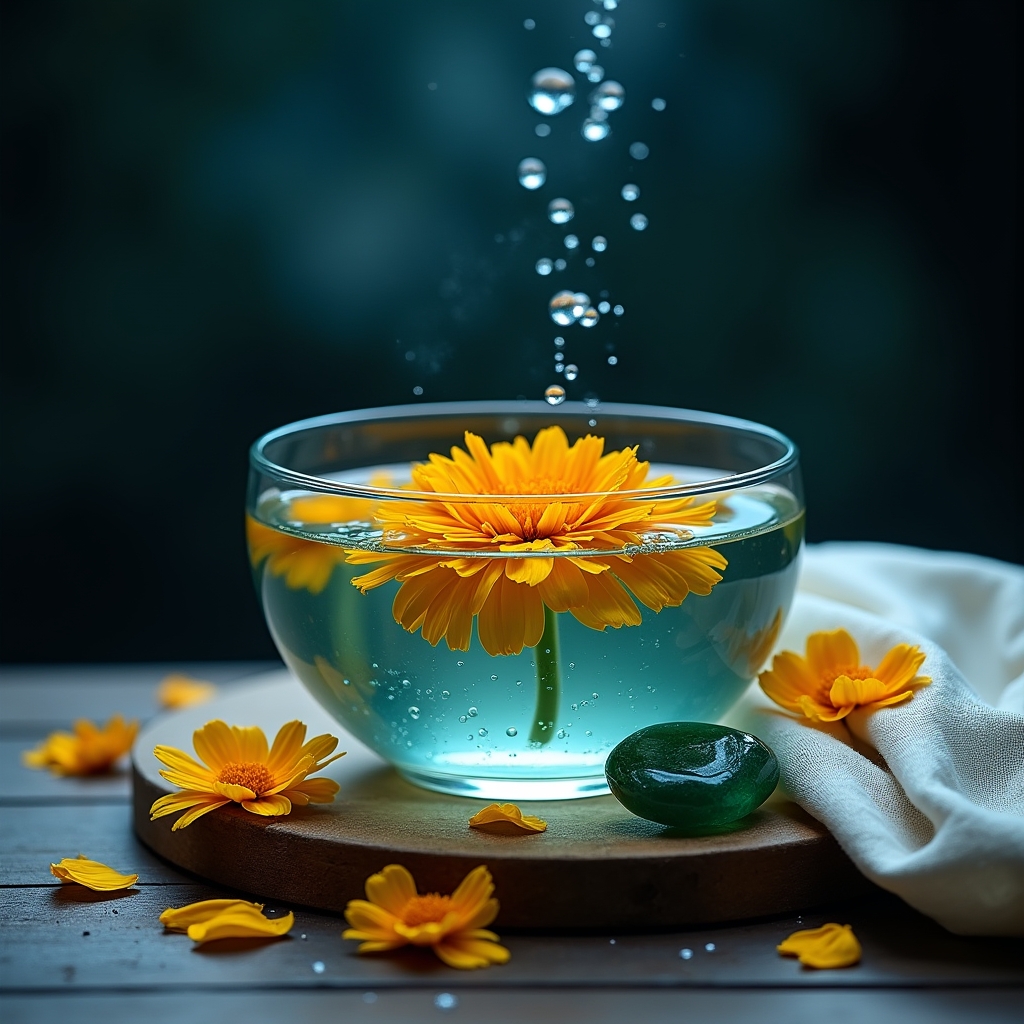
Its presence is especially welcome when life has become abrasive around the edges. A bowl of warm water, a clean cloth, and a mild calendula infusion for an evening compress can feel like a return to simpler wisdom. Not a grand rite, only a quiet gesture of care. Lay the cloth over tired hands, or hold it for a moment at the back of the neck after too many hours of thinking. The message is plain: soften what has been overheld.
Should dried calendula be waiting in your cupboard, one simple practice is enough. Steep the petals in hot water, cover the cup, and let the color deepen slowly. Use the cooled infusion externally as a gentle rinse for the hands, or add a little to a basin for washing away the day. Watch how the water turns gold and how your pace changes while you wait. The medicine here is partly the herb, partly the permission to stop rushing.
Always use herbs consciously and check for any personal contraindications.
Calendula also teaches something about balanced strength. It is bright, but not aggressive. Restorative, yet unshowy. It does not seize attention; it steadies the field around it. If your thoughts have become sharp or scattered, place a small bowl of calendula petals on the table where you write or drink your tea. Their color can serve as a quiet instruction: remain warm, remain clear, do not harden.
Aventurine: presence, touch, and concrete listening
In the morning light, a small green stone on the windowsill can look almost ordinary until the hand closes around it. Aventurine does not ask for spectacle. It asks for contact. Its quiet surface, cool at first and then slowly warmed by the skin, offers a simple way to remember that strength is not always loud. On a day shaped by the thinning moon, when the world seems to murmur less, but truer, this kind of steadiness matters.
The form of power that comes forward here is not conquest, but discernment. Air clears. It separates what is useful from what is only noise. Holding a stone like aventurine can become a practice of concrete listening: not drifting into abstraction, but noticing what the body does when something is right. The jaw softens. The breath stops climbing so high in the chest. A thought that felt urgent reveals itself as merely habitual.
Keep aventurine nearby and use it lightly. Place it in your palm before answering a message, before making a promise, before filling the day with errands that leave no room to hear yourself think. Ask one plain question: What actually needs my care today? Then wait long enough to notice the first honest answer.
Beside this gesture, calendula belongs beautifully. Its petals carry the color of small suns, yet its medicine is gentle. A bowl with a few dried calendula flowers near your writing place or bedside can serve as a reminder that clarity need not be harsh. It can be warm, mending, and precise. If you prepare calendula as a tea, keep it simple and soothing, and always use herbs consciously and check for any personal contraindications.
The ritual water vessel
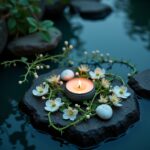
A clear vessel of water changes the feeling of a room. A glass jug, a ceramic bowl, even a plain cup set where daylight can find it: each one gathers stillness. Under a waning moon, water becomes a companion for release and preparation. It does not push. It receives, settles, and reflects.
This is a good hour for a modest rite, the kind that fits into real life without pretending to grandeur. Fill the vessel with fresh water. If you wish, float one or two calendula petals on the surface, not as decoration alone but as a sign of clean warmth, of what heals without demanding attention. Sit beside it for a few quiet minutes and name, either aloud or silently, what has become too crowded: one obligation, one fear, one stale thought you are ready to stop feeding.
Then wash your hands slowly in a little of that water, or simply dip your fingertips and touch your brow, throat, and heart. The gesture is enough. It marks a boundary between what clings and what may now loosen. True force often hides here: in the ability to clear a space and not rush to refill it.
If a crystal has a place here, clear quartz can be meaningful for its plainness. It does not color the moment so much as sharpen it, like clean air after rain. Rest it beside the vessel rather than in the water unless you are certain the stone is appropriate for contact. Keep the practice uncomplicated; the point is attention, not accumulation.
Bringing this atmosphere into daily life without forcing it
Not every day allows long silence, open windows, or a careful ritual table. Sometimes clarity has to be carried into ordinary movements: folding laundry while the kettle hums, stepping outside to shake crumbs from a cloth, pausing before one more unnecessary yes. The waning moon supports this kind of editing. It favors what is pared back, breathable, and sincere.
One common mistake in moments like this is trying to turn gentleness into a task. Then even rest becomes one more thing to achieve. Better to work by subtraction. Leave ten minutes unfilled. Put one object back where it belongs. Drink water before reaching for distraction. Open the door and let spring air move through the room, even if only for a minute. Air teaches that authority can come through circulation, not control.
A practical way to embody this is to choose one area of life that feels overgrown and thin it lightly. Not overhaul—thin. A crowded shelf. A string of pending plans. A conversation that needs fewer explanations and more honesty. The point is not self-denial. The point is to make room for what can actually take root.
If you want a small anchor, keep a single calendula flower in a dish near the sink or mirror. Each time you see it, let it call you back to warm precision: speak a little more clearly, schedule a little less, listen before reacting. This is how power matures under a quieter moon—not by display, but by choosing what remains when excess falls away.
Some days that will look like action. Some days it will look like restraint. Trust the difference. The season is already showing it everywhere: buds do not open by being pulled apart. They open because the conditions are right.