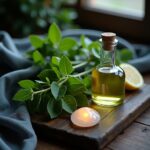
On May 13, 2026, the Waning Moon in Pisces turns attention toward what has been left half-done: the cup by the sink, the unanswered feeling, the task that no longer needs perfecting, only closure. This is a quiet, practical kind of release, where intuition arrives through small domestic signs and the body’s need for less.
What the waning light asks to be seen
There are days when the house itself seems to speak. A glass left by the sink, a chair draped with yesterday’s sweater, the faint dust gathered on a windowsill where spring pollen has settled like pale gold. Under the Waning Moon in Pisces, these small signs ask for attention without urgency. Not because everything must be fixed, but because something is ready to be finished, rinsed, released.
Pisces softens edges. It blurs the line between fatigue and intuition, between clutter and the feelings that cling to it. What comes into focus now is rarely loud. It may be the task postponed for weeks, the conversation already ended in the heart, or the simple truth that one corner of life needs less tending and more blessing before it is set down. This moon does not demand conquest. It favors listening so quietly that even the sound of water in a basin can feel like an answer.
The most faithful use of this fading lunar light is often domestic and humble. Sweep the threshold. Open a window for ten minutes and let the cool air move through the room. Wash a cup slowly, as if clearing not only the porcelain but the residue of haste. When the moon is thinning, completion is less about dramatic endings than restoring right proportion. What is overfull can be emptied. What is unresolved can be named. What is tender can be protected.
If the mind feels porous or overextended, choose one place in the home to become a refuge again: the bedside table, the kitchen counter, the bath. Clear it completely. Wipe it with warm water. Return only what truly belongs there. This is not decoration for its own sake. It is a signal to the nervous system, and perhaps to the spirit as well, that not everything must be carried forward.
Mars at the doorway
Against this watery, dissolving mood, Mars arrives like a struck match. Not a wildfire, not a command, but a clean red thread of courage running through the day. The contrast matters. Without it, the waning phase could become drift, a beautiful fog with no form. Mars gives the hand its steadiness. It helps the body follow through where the heart has already decided.
So the tone is not passive. It is brave in a quiet way. Completion here may mean taking the bag of old papers out to recycling before doubt returns. It may sound like a firm, gentle no. It may be the decision to stop feeding what has become a leak of time, affection, or attention. Water knows how to dissolve; Mars knows when to cut the cord.
There is a sacred usefulness in finishing one practical thing before sunset. Mend the torn hem. Reply to the message that has lingered too long. Return the borrowed object. Extinguish one source of background strain. These acts seem ordinary, yet they change the atmosphere around a person. The body relaxes when it no longer has to circle the same unfinished matter.
If a stone belongs here, it is only in service of clarity. A small piece of smoky quartz by the door or beside a bowl of keys can be enough: not as ornament, but as a reminder that release also needs structure. You leave something behind, and in doing so, you become more present to what remains.
Vervain for the hour of soft correction
Vervain does not enter a room with sweetness. It has a lean, bright character, almost austere, as if it knows how easily devotion can become excess. Its stems rise with a kind of spare determination, and its small violet-blue flowers carry a quiet dignity. On a day shaped by endings and cleansing, vervain makes a wise companion because it helps restore measure where the spirit has been straining too hard.
Remember this herb when care has tipped into vigilance, when purpose has become tension in the jaw, when even noble intentions have left the body tired. Its symbolism fits the moment precisely: not collapse, not denial, but recalibration. To complete something well, one must sometimes loosen the grip on it.
A simple gesture is enough. Place a small bowl of warm water on the table. Beside it, set a sprig of vervain if you have it fresh, or a pinch of the dried herb in a little dish. Rest both hands around a cup of plain warm water or vervain tea, inhaling before you drink. Look at one surface in the room that needs clearing. Choose only that one. As you tidy it, move slowly and stop before the task turns into a campaign. The point is balance, not perfection.
Vervain tea can be used in a modest, mindful way as part of this pause, especially when the mind is overheated by obligation. Keep it simple and light. Always use herbs mindfully and check for any personal contraindications.
By evening, the room may not look transformed to anyone else. Yet a shelf will be clear, the air will feel easier, and the heart will know that something has been brought to its rightful close. That is often how true endings arrive: not with thunder, but with a small return of peace, like water finally settling after a stirred hand has gone still.
Aventurine in the palm: presence, touch, and grounded listening
There are days when finishing something does not look like a grand decision. It can be a hand resting on a windowsill after wiping away dust. It can be a drawer finally closed. It can be the soft green of aventurine held in the palm while the evening light thins and the house exhales. On May 13, this quieter kind of ending asks for attention. Not the sharp cut of severing, but the moist, receptive wisdom of water: what has ripened enough to be released, rinsed, or simply set back in its rightful place.
Aventurine belongs well here because it does not shout. Its green is leaf-deep, moss-deep, the color of a path after rain. Touching it can become a way of listening with the body before the mind rushes in to explain everything. Under the waning moon, that matters. This phase does not ask for declarations. It favors reduction, honest sorting, and the courage to notice what has already ended, even if habit keeps pretending otherwise.
If you keep a small stone near the door, on a bedside table, or beside a bowl where keys gather, let aventurine stand as a witness to what is being completed with tenderness rather than strain. Hold it for a minute and ask a plain question: What am I still carrying that has already done its work? The answer may come as an image instead of a sentence: wilted stems in a jar, an unanswered message that no longer needs answering, a task that requires only one last practical gesture.
Here is where Mars adds its useful spark. Not noise, not conflict, but enough courage to finish the small earthly thing. Fold the blanket. Return the borrowed object. Wash the cup left in the sink since morning. Completion becomes believable when it enters the hands.
Vervain can accompany this mood beautifully, especially when the mind has become overbright and the nerves are still humming long after the day should have softened. One simple way to work with it is to place a few dried sprigs in a small bowl near your cleaning cloths or by the place where you remove your shoes, letting its presence mark the threshold between effort and release. Some also enjoy vervain as a gentle tea during reflective evenings, but always use herbs mindfully and check for any personal contraindications.
The stone and the herb do not solve life. They refine attention. Aventurine steadies the hand; vervain loosens what has become too taut. Between them, the unfinished begins to show its true size.
Scent on the skin, stone at the threshold
A home becomes a refuge through repeated acts so small they are easy to dismiss. A drop of scent pressed onto the wrists. A threshold cleared of grit. A stone placed where the foot hesitates before entering. These are not decorations for the day; they are ways of teaching the body that crossing over matters.
If aventurine is your chosen companion, set it by the door or on the inner ledge of a window that catches the last light. The threshold is where endings and beginnings brush sleeves. Under a waning moon in Pisces, it becomes an especially eloquent place: the old weather leaves on your coat, the outer world loosens, the private realm receives you. A green stone there can serve as a quiet instruction: arrive lighter than you left.
For scent, keep it simple and close to the skin. A floral water or a very diluted herbal perfume touched to pulse points can shift the atmosphere without turning the moment into theater. The purpose is not to smell impressive; it is to mark transition. Choose a fragrance that feels clean, green, or softly bitter rather than sugary. If vervain appears here, it is lovely for exactly that reason. Its brightness has a clarifying edge, like opening a shutter after stale air. It can help the mind stop circling and return to the room it is actually in.
One beautiful pairing is this: touch the scent to wrists and collarbone, then rest your fingers for one breath on the aventurine near the door before stepping inside. The gesture takes seconds. Yet it says, in the old language of ritual, that what belongs to the street may remain there, and what belongs to the hearth may come forward.
Keep discernment close. If you use herbal body products, especially those containing vervain or essential oils, always use herbs mindfully and check for any personal contraindications. A ritual should never ask the body to endure what it does not welcome.
How to let this atmosphere enter the rooms and hours without forcing it
The temptation with any symbolic practice is to make it perform. To arrange the stone perfectly, to choose the right words, to wait for a feeling grand enough to confirm that something meaningful has happened. But the wisdom of a waning moon is plainer than that. It asks for subtraction. It asks for enough softness that a truer ending can appear.
So do less, and do it with care.
Open one window, even briefly, and let the cool air move through a room where the day has collected. Wipe one surface until it feels clear under the hand. Empty one cup of stale water from a vase. Move one object back to where it belongs. Then stop long enough to notice the difference. Completion is often hidden inside these modest acts because they restore proportion. They tell the nervous system that the shelves, counters, and corners do not need to keep holding everything at once.
If you want a simple rhythm for the evening, this is enough:
- Place aventurine where you will naturally touch it.
- Choose one area of the home to cleanse or settle.
- Let vervain be present as tea, dried herb nearby, or a gentle scent if it suits you.
- Before sleep, name one thing that is finished and does not need to be reopened tonight.
Notice how this differs from control. Nothing is being conquered. Listen to the house. Listen to the body. Even courage, with Mars stirring in the background, becomes more useful when directed toward the ordinary truth: enough for today is enough.
By evening, spring’s rebirth is not always found in what begins. Sometimes it is found in what has finally been cleared away: the dead stem clipped at the base, the ash swept from the hearth, the old thought no longer fed. Aventurine keeps the tone gentle. Vervain keeps it lucid. Between them, the day closes like water around a stone: quietly, completely, and without waste.