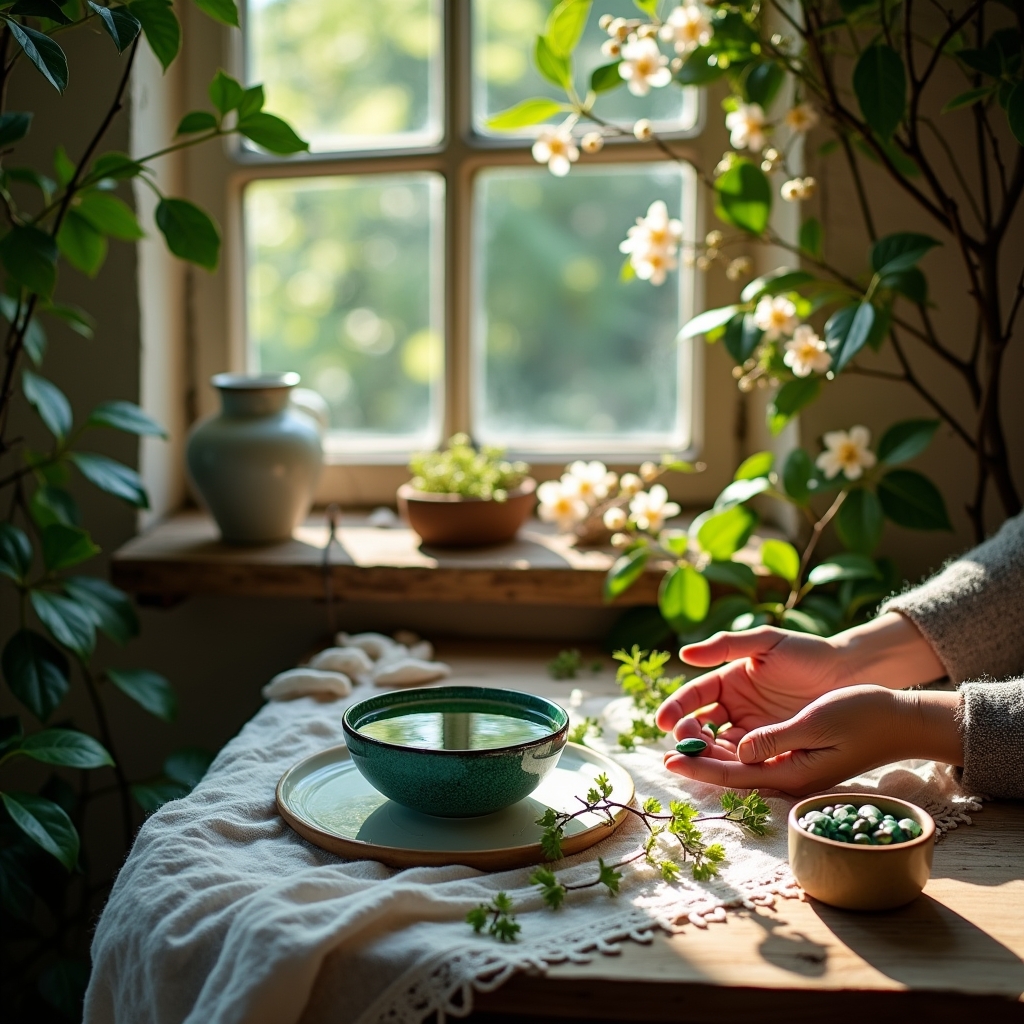

On May 09, 2026, the Last Quarter Moon in Aquarius sharpens the eye for what has quietly outlived its place in your life. This is a clear, unsentimental pause: a moment to name old loyalties, loosen stale obligations, and make room for a freer way of moving forward.
What the Last Quarter in Aquarius brings into focus
The moon has reached that lean, thoughtful bend of the cycle when the bright story begins to loosen. In the Last Quarter, what remains asks to be measured honestly: what still belongs in the house of the heart, and what has already become an echo. With Aquarius coloring the sky, this review does not happen in heavy velvet or tears alone. It comes like cool air through an open window. It asks for space, perspective, and the courage to stop confusing attachment with loyalty.
There is something unmistakably airy in this moment. A room after the guests have gone. A table with only a few objects left on it: a cup, a letter, a key. The mind can finally see their shape. Aquarius has a way of showing where feeling has become tangled in old habit, where care has quietly turned into obligation, where the desire to keep peace has led a person to abandon their own clear edge.
This lunar turning favors assessment over drama. Not every ending needs thunder. Some endings arrive as recognition. Perhaps a conversation leaves you smaller each time it ends. Perhaps a promise made in another season no longer reflects the person you are becoming. Or perhaps silence reveals itself not as emptiness, but as preparation.
The gift here is not detachment for its own sake. It is the kind that makes room for truer affection later. When the past is no longer carried like a bundle of wet branches, the hands are free again. That is where the day points: toward a lighter kind of fidelity, rooted in honesty rather than repetition.
A small practice suits this moon well. Open a window, even briefly. Stand there for a few breaths and choose one unfinished emotional thread to name plainly, on paper if needed. Not the whole history. Just the thread. Then ask: Does this still ask for my devotion, or only my release? The answer may not be dramatic, but it will often be clean.
Venus and the quiet shape of release
Venus softens whatever she touches, but in Aquarius her tenderness is less possessive, more spacious. She does not cling to prove love. She steps back enough to let truth breathe. Under her influence, affection becomes clearer when it is not crowded by fear. This is where the theme of freedom becomes intimate rather than grand: in the way one speaks, in the boundaries one finally stops apologizing for, in the decision to offer warmth without self-erasure.
Picture a hand opening instead of tightening. That is the tone. Not coldness, not indifference, but a more lucid form of care. Venus here asks whether harmony has been built on sincerity or on avoidance. She is especially revealing when old emotional patterns dress themselves as kindness: saying yes to keep the surface smooth, returning to what is familiar only because it is familiar, calling it love when it is really reluctance to disturb the arrangement.
The heart may feel this as a subtle rearranging rather than a storm. A clearer sentence arrives. A delayed message is no longer sent. A longing is seen for what it is: not a call to return, but a sign that something in the present needs more beauty, more companionship, more truth.
If a stone belongs beside this reflection, it is rose quartz only in its gentlest sense—not as ornament, but as a reminder that softness and self-respect can live in the same body. Held during a pause, it can help anchor the simple thought: tenderness does not require surrendering discernment.
This is a day for refining the heart’s language. Fewer vows made in exhaustion. Fewer rescues offered from guilt. More choices that leave the chest unknotted. Care and harmony are not lost when the old script is released; they are often born there.
Honeysuckle at the threshold
Honeysuckle carries a particular kind of memory. Its scent lingers in the evening air, sweet and almost impossible to separate from longing. It climbs fences, arches over gates, slips into the edges of a garden as though it remembers every path it has ever touched. Because of this, it makes a fitting companion when the heart is sorting what to keep close and what to bless from afar.
Symbolically, honeysuckle is often tied to bonds of affection, remembrance, and the pull of what once nourished us. Under a waning moon, its lesson becomes more precise. Not every memory needs to be uprooted. Some simply need to stop directing the road ahead. Honeysuckle teaches balance here: cherish the sweetness, but do not live with your face turned only toward yesterday.
A simple gesture is enough. If you have access to fresh honeysuckle growing in a clean place, stand near it at dusk and inhale gently without harvesting more than you need. If not, a small bowl of water with a few safe, properly identified blossoms placed beside a window can carry the same intention. As you sit with the scent, name one attachment that has become too tight. Then name one value you want to carry forward from it—kindness, discernment, patience, delight. This keeps the wisdom and loosens the bind.
You might write both on a slip of paper: what is being released, and what is being retained in purified form. Fold it once and place it beneath the bowl or beside the vine for a night. In the morning, discard or store the note according to what feels complete. The act matters because it gives the mind a threshold to cross. Air signs often need that visible sign that a thought has become a choice.
Work with herbs gently and with clear identification. Honeysuckle is best kept here as scent, presence, and symbol, especially if you are uncertain of the plant or of your own sensitivities.
The sweetness of this plant is not an instruction to cling. It is a reminder that release does not cancel love. It refines it. What remains after honest review is often simpler, cleaner, and more alive—like a vine after pruning, ready to climb toward the light.
Malachite: presence, touch, and grounded listening
Malachite does not arrive softly. Its green bands look like little weather systems, rings of forest and deep water turning around a hidden center. It is a stone that asks for honesty in the hands. On a day marked by the waning half-light of the Moon, when the sky seems to pause and ask what still deserves carrying, malachite becomes less ornament than companion: something to hold while the mind loosens its old knots.
The heart may want open air now, more room, fewer inherited obligations, less of the past pressing its thumb into the ribs. Yet release is rarely made by force. Air needs a boundary to become a song; wind is heard because branches stand still enough to receive it. This is where malachite offers its quiet lesson. Its weight brings thought down from the spinning heights and into the palm, the chest, the soles of the feet. Not to deny longing, but to keep it from scattering.
There is a particular kind of listening that belongs to this phase of the Moon: not the eager listening that hunts for signs, but the steadier kind that notices where life has already answered. A conversation that keeps repeating itself. A room that feels tight no matter how often it is cleaned. A promise that once felt loving and now feels like a locked gate. Hold the stone for a few breaths and ask a plain question rather than a grand one: What am I maintaining that has already ended? The answer may come as a memory in the body before it becomes language.
If you keep crystals, malachite is meaningful here because it mirrors the work of review without sentimentality. It does not soothe by making everything feel light. It steadies by helping what is true come into focus.
Beside it, honeysuckle brings a gentler note. Its vine knows how to cling, twine, and sweeten the air at dusk. In the old emotional landscape, honeysuckle often points toward memory, attachment, the ache of what once bloomed. On a windowsill or in a small bowl near the bed, its fragrance can reveal how easily sweetness turns into staying too long with what is already behind us. That is not a fault; it is simply a threshold. Scent can teach what thought resists. If it stirs nostalgia, ask whether you are honoring a memory or living inside it. Work with herbs gently, and pause if the plant does not feel clearly identified or well suited to you.
Stone at the foot
Imagine a path after rain. The ground is dark, the edges silvered with morning, and one stone near the bend is large enough to make you notice your step. Not an obstacle exactly, but a correction. Something that changes the way the body proceeds.
The Last Quarter Moon often works like that stone. It does not bar the road; it reveals the gait. What has become habitual, what drags, what is done from loyalty rather than truth. Under Aquarius, the desire for wider skies is real, but not every chain is iron. Some are woven from old tenderness, from the wish to be good, from the fear that choosing differently will make us cold. The wiser act is not rebellion for its own sake. It is discernment.
Malachite at the foot of this image becomes almost architectural. A marker stone. A reminder that liberation without contact with the body can become performance, all proclamation and no root. If you are restless, place one hand on a wall, a table, a tree trunk, anything solid. Then notice the smallest fact available: the temperature of the surface, the pull in the ankles, the way the jaw is set. This kind of attention is humble, but it prevents false departures.
Honeysuckle belongs here too, though in a different manner. Vines often grow where they can borrow structure from something else. There is wisdom in that, and also a warning. Sometimes we say we are waiting for the right moment, when in truth we are leaning on a life that no longer supports our becoming. A practical gesture for the day is simple: clear one physical threshold. The doorstep, the entry table, the path to the bed, the corner where bags and old papers gather. Sweep it well. If you have a safe honeysuckle infusion prepared for household use, a lightly scented cloth for wiping the door handle can turn the task into a quiet act of release. Keep the preparation mild, and let caution guide your hands if the plant is unfamiliar or your body is sensitive.
The stone at the foot asks for less drama and more accuracy. Where do you keep stumbling in the same place? That place is speaking.
Bringing this atmosphere into the rooms, thresholds, and small habits of the day
Some days are not meant for grand declarations. This one asks for cleaner edges, kinder distances, and the courage to stop feeding what has already run its course. The most faithful way to meet it is through proportion.
If the house feels overfull, choose one drawer, one shelf, one small cluster of objects. Touch each thing slowly. Malachite teaches through contact: the hand knows before the mind has assembled its argument. Keep what still participates in the life you are actually living. Set aside what belongs to an earlier version of your heart.
If relationships are on your mind, do not rush toward a final speech unless clarity is already ripe. Instead, revise the pattern around the bond. Delay the reflexive message. Decline one invitation that leaves you feeling split. Leave a little unclaimed air in the evening. Space is not abandonment; often it is the first form of respect.
A useful ritual can be plain enough to escape the name. At dusk, open a window for a few minutes. Place malachite nearby if you have it, not as a command but as a witness. Breathe in and out until the room feels less occupied by yesterday. Then write three brief lines:
- what is ending by itself,
- what I keep reviving from habit,
- what deserves tenderness without possession.
That last line matters. The Venusian note in the sky does not ask for detachment that hardens the heart. It asks for care with more room inside it.
Honeysuckle can accompany the evening in a modest way: a safe, lightly fragrant presence near the window, or a moment spent with the living vine if it grows nearby, noticing how it reaches and curls. Its teaching is not to reject sweetness, but to recognize when sweetness has become a tether. Let the scent remain simple, and keep the plant work gentle and well identified.
By nightfall, the aim is not to feel transformed. It is enough to feel less entangled. A little more sky in the chest. A little more truth in the step. That is how the path opens—quietly, as if it had been waiting for you to stop carrying what was never yours to keep.

