
By the time the Flower Moon rises, what has been quietly growing often asks to be seen without excuses. This piece lingers with the Full Moon in Scorpio as a mirror for honest feeling, naming what is ripening, what is draining away, and what the heart can no longer keep in shadow.
What the Full Moon in Scorpio brings into focus
At dusk, the garden changes its voice. Petals that looked soft and ordinary in the afternoon begin to hold light differently, and even the dark leaves seem more exact at their edges. A full moon in this season often does that to the heart as well: it sharpens what has been half-felt, half-avoided, half-named.
With the Flower Moon at its height, growth is no longer a promise. It is visible. Something has opened, whether we were ready to admire it or not. In Scorpio, that opening rarely stays at the surface. Old grief may return not to punish, but to show where attachment, fear, or silence has been governing more than love. What comes into focus now is often the truth beneath the performance: the conversation that needs honesty, the desire disguised as duty, the wound that keeps asking to be handled with more tenderness and less pride.
This is not a delicate moon, though it can be deeply healing. It reveals by contrast. You may notice where your body tightens when a certain name appears on your screen, or how quickly your voice changes when you speak about something you say no longer matters. These are useful signs. The waters of Scorpio do not ask for a polished answer. They ask for accuracy.
If the evening feels emotionally crowded, choose one small act of observation. Fill a bowl with water and set it near a window where moonlight can touch it, even faintly. Sit beside it for a few minutes without trying to brighten the hour or explain it away. Ask only: What am I finally ready to see clearly? Do not force a revelation. Sometimes the answer arrives as an image, a memory, or a sentence so plain it is easy to dismiss. Keep that sentence. Plain truths are often the ones that change a life.
Venus and a quieter kind of seeing
There are days when the heart speaks in thunder, and days when it speaks through taste, texture, and the way the hand hesitates before reaching out. Venus lends this moon a more intimate language. Not softer, exactly, but closer to the skin. She turns attention toward what we receive, what we refuse, and what kind of beauty we trust enough to let near.
Under this influence, reflection is not a grand performance of self-knowledge. It may look like noticing that you have been accepting crumbs where you long for steadiness. It may look like admitting that a certain affection is rooted in memory rather than reality. Venus asks whether love, in your life, has become ornamental or nourishing. Scorpio insists on an honest answer.
That combination can stir strong feeling, yet it also offers a rare chance to transform the heart without dramatizing it. Not every change needs to be announced. Some of the most lasting ones begin in private: at a sink full of dishes, while folding linen, while standing barefoot on cool floorboards after sunset. You realize, with unusual clarity, that you can stop rehearsing an old hurt. You can stop calling vigilance wisdom. You can choose a form of devotion that does not ask you to disappear.
If you want a tangible companion for this kind of discernment, rose quartz can be meaningful here, not as a charm that solves pain, but as a reminder that gentleness is not the opposite of truth. Hold it in your palm for a moment and ask yourself where softness would actually create better boundaries, not weaker ones. Then set it down and act on what you know. A crystal is most useful when it returns you to your own clear seeing.
Rose: a simple gesture to regain balance
A rose on the table changes a room even when no one comments on it. Its presence is quiet, but unmistakable. The curve of the petals suggests openness; the thorns keep the lesson honest. Rose is one of the clearest plant mirrors for emotional balance because it does not separate tenderness from protection. It teaches both at once.
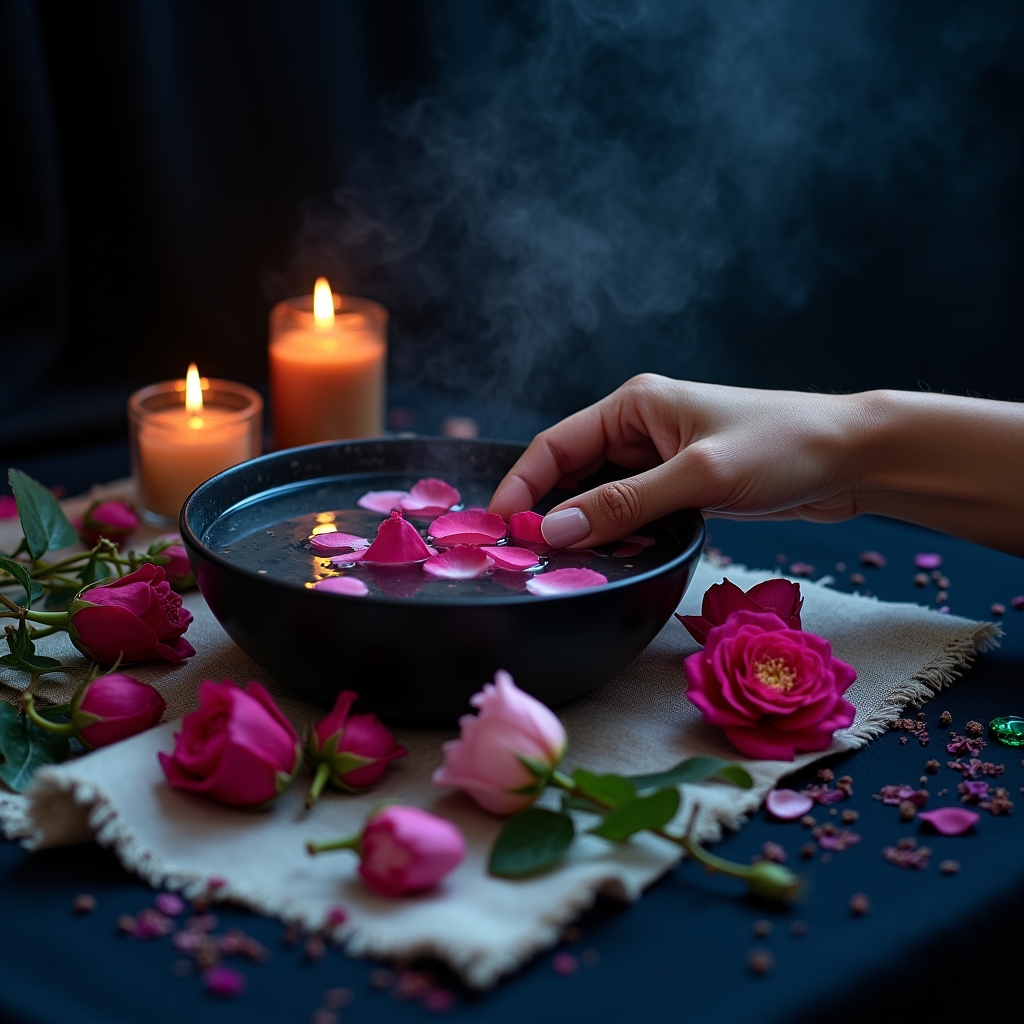
If the day feels swollen with feeling, make a small ritual from that teaching. Place a fresh rose, or a few unsprayed petals, in a bowl of cool water. Sit with it for a few breaths before bed or at first light. Notice the scent without rushing. Notice the color. Notice whether your chest softens or resists. Then ask: Where do I need more kindness, and where do I need clearer edges? This is a better question than asking how to become endlessly open. Balance is not constant availability.
You can also steep culinary-grade rose petals in hot water for a gentle tea, especially when the mind has become brittle from overthinking and the body is asking for a slower cup, warm hands around the mug, a quieter pace. Always use herbs mindfully and check for any personal contraindications. If rose is not suitable for you, the ritual still works beautifully with the flower in water and a few minutes of undistracted attention.
Afterward, write down one thing you will no longer carry simply because it has become familiar, and one thing you are ready to nourish with more care. Keep the words short. A full moon tends to illuminate excess; rose helps return the heart to proportion. In that proportion, beauty becomes less about appearance and more about right relationship: with your own feelings, with your limits, with the love that heals because it is rooted in truth.
Emerald: presence, touch, and grounded listening
The night feels fuller when something green is held in the hand. Not bright like noon leaves, but deep green, like ivy after rain or moss pressed against stone. If an emerald is part of your practice, this is where it earns its place: not as ornament, but as weight, color, and reminder. Under the Flower Moon, when feelings rise quickly and truth can arrive without much warning, the body needs something steady to answer with.
Place the stone in your palm for a few quiet breaths, or rest it at the base of the throat while you sit near an open window. Listen first to what is ordinary: a branch tapping the glass, the settling of the house, your own swallow. This kind of listening matters. Scorpio’s full moon light does not skim the surface; it asks what has been held beneath politeness, habit, or old protection. Venus softens that asking, but does not make it shallow. What comes into focus now often has to do with love made more honest: where tenderness is ready to deepen, where resentment has overstayed, where beauty has been confused with pleasing.
Emerald has long been linked with the heart, yet its gift here is not sweetness alone. It helps love become verdant rather than vague—rooted, breathable, capable of holding complexity. If you do not have emerald, a simple green leaf held between the fingers can teach the same lesson, if only for a moment: presence begins in contact.
A rose can guide this listening. Run a fingertip gently along the outer petals of a fresh bloom and notice how softness does not cancel structure. The flower opens because it is well formed, not because it has no boundaries. There is a useful reflection in that. During a revealing moon, many people think they must either guard the heart or spill everything at once. Rose suggests another way: honest feeling, shaped with care.
If words begin to gather, keep them close to the senses. Instead of asking, What is my deepest truth? ask, What tightens in me when I say yes and mean no? or Where have I mistaken longing for devotion? The answers may come as memory, body sensation, or a sudden image rather than a speech. Trust the form they take.
A bowl of water, a leaf, and what rises to the surface
A wide bowl filled with cool water can hold more meaning than a page of declarations. Set it where moonlight might find it, or where a candle can cast a wavering reflection across its surface. Add one gentle herb only if it plainly serves the moment: a few rose petals for tenderness, a little lemon balm for calm, or a sprig of mint for clarity. Always use herbs mindfully and check for any personal contraindications.
This small act suits a full moon because water reveals by receiving. It does not argue. It shows what falls into it, what floats, what sinks, what disturbs the surface for a while and then grows still. That is close to the work of honest self-seeing. Under this moon, emotions may feel amplified, but amplification is not the same as confusion. Sometimes it is simply the sound of a truth no longer muffled.
There is no need to turn the bowl into a ceremony with too many steps. Sit before it. Dip your fingers into the water. Touch brow, throat, and heart if that feels natural. Then speak one sentence aloud—something spare and real. Not a grand vow. Something like: I am ready to see what I have been decorating instead of healing. Or: I can grieve what was beautiful and still release it.
Watch the herb drift. Rose petals often spread slowly, making small islands of color before they soften and darken. They are beautiful, but they also change quickly in water. That, too, is part of their wisdom. Beauty is not diminished by impermanence; it becomes more precise. If an old attachment, an old wound, or an old version of yourself comes to mind, do not rush to judge it. Name what it gave. Name what it cost. Then let the water hold the rest for a while.
If you want one practical closing gesture, pour the water at the roots of a healthy plant the next morning. It is a modest way of returning reflection to the living world.
Carrying the mood of the moon into ordinary hours
The most useful revelations are the ones that can survive breakfast, errands, and unanswered messages. A luminous night may open the heart, but the real question arrives later, while folding laundry or waiting at a crosswalk: what will be done differently, gently, without theater?
Begin with one adjustment that can be felt in the body. If a conversation has been asking for honesty, answer after one full breath instead of rushing to fill the silence. If your days have become overfilled, leave one margin unclaimed: ten unscheduled minutes before supper, a walk without your phone, a chair by the window at dusk. If grief has been disguised as busyness, place a rose in a jar by the sink and let its scent meet you while the dishwater runs. These are not small things when done steadily. They teach the nervous system that clarity does not have to arrive as rupture.
The Flower Moon brings fullness, and fullness can tempt excess: too much analysis, too much confession, too much meaning pressed onto every glance and dream. Better to stay close to what is verifiable. Did your chest soften after saying no? Did your sleep deepen after returning to a simple evening rhythm? Did a certain memory lose its sting when you stopped feeding it with fantasy? Grounded listening continues by noticing consequence.
For some, a crystal on a desk becomes useful here only because it interrupts forgetfulness. Emerald, seen in daylight beside a cup or notebook, can recall the promise of honest tenderness made under the moon. But the deeper practice is simpler than any object: pause before reacting, feel where the truth lands in the body, and answer from there.
Nothing needs to be forced open. A bud does not bloom because it is pried apart. It opens because conditions have become right. Keep the conditions right: a little quiet, a little beauty, one less false yes, one more faithful breath. That is enough for revelation to become part of the washing, the walking, the answering of letters, rather than a passing spectacle.