
On May 06, 2026, the Waning Gibbous Moon in Sagittarius casts its clear, slanting light on the places where we are split between instinct and explanation, freedom and responsibility. This is a moon for noticing what remains after the rush—what still rings true, and what asks to be released with honesty.
What the Waning Gibbous Moon in Sagittarius brings into focus
The evening light lingers on the window glass a little longer now. A cup is left half full on the table, the garden soil still holding the warmth of the afternoon, and somewhere a bird keeps calling after sunset as if the day has not fully decided to end. This is the kind of threshold the waning moon reveals: not the beginning of a thing, but the moment when its true shape can finally be seen.
Under a Waning Gibbous Moon, what has grown bright over recent days begins to loosen. In Sagittarius, that loosening does not feel small or domestic. It widens the frame. It asks where conviction has become excess, where a noble impulse has turned into restlessness, where truth has been used as a torch when a lantern would do. The fire here is not only enthusiasm. It is also the heat that exposes what no longer needs to be carried forward.
There is a tension worth honoring: the part of the spirit that wants to leap ahead, and the quieter wisdom that knows some things must be digested before they can become strength. This is where contrast becomes useful rather than divisive. You may notice it in ordinary moments. A sharp opinion softens during a walk. A plan that felt urgent in the morning looks inflated by dusk. A conversation reveals that certainty was hiding fear.
The moon, in her diminishing brightness, offers a gentler instruction than conquest. Release the performance of knowing. Keep the lesson. Let the excess burn off like mist over a spring field. What remains is often simple: one belief that still rings true, one obligation that can be set down, one promise that deserves real devotion.
If the mind feels scattered, step outside for a few minutes at twilight. Look toward the farthest visible line—rooftops, trees, a hill, even a cloudbank—then bring your attention back to your own feet. That small movement between distance and ground mirrors the work of this moon: vision, then integration; fire, then form.
Mars and the pull between impulse and restraint
There are days when the body answers before the mind has finished the question. A quicker reply. A firmer step on the path. The sudden urge to clear a drawer, send the message, cut away what has become dead weight. Mars has a way of entering like that—through muscle, heat, and the old instinct to move first.
Yet the lunar backdrop changes the quality of that movement. This is not raw acceleration for its own sake. It is action meeting aftermath. The hand reaches for the door, but the heart knows that not every threshold should be crossed in the same manner. One force says, go. Another says, discern what must be left behind before you go. The friction between those two voices is not a flaw in the day. It is the teaching.
Fire, when grounded, becomes courage. Ungrounded, it becomes reaction. That distinction matters now. If irritation rises quickly, look for the older root beneath it. Often what appears as impatience is grief that has not been named, or fear dressed in armor. The wiser use of strength is not denial but refinement. Strike the flint, yes—but know what you are trying to light.
A practical way to work with this tone is to choose one decisive act and one deliberate pause. Clear the unanswered task that has been draining your attention. Then leave space before making the next move. Action without reflection can scatter; reflection without action can sour. Held together, they become integrity.
If you keep a stone for steadiness, this is one of the few moments when it can be genuinely useful. A dark, grounding crystal such as smoky quartz may serve as a tactile reminder to come back into the body before speaking from temper or haste. Not as decoration, and not as a charm that acts in your place, but as a weight in the palm when the mind starts running ahead of the soul.
Garlic: a simple gesture to regain balance
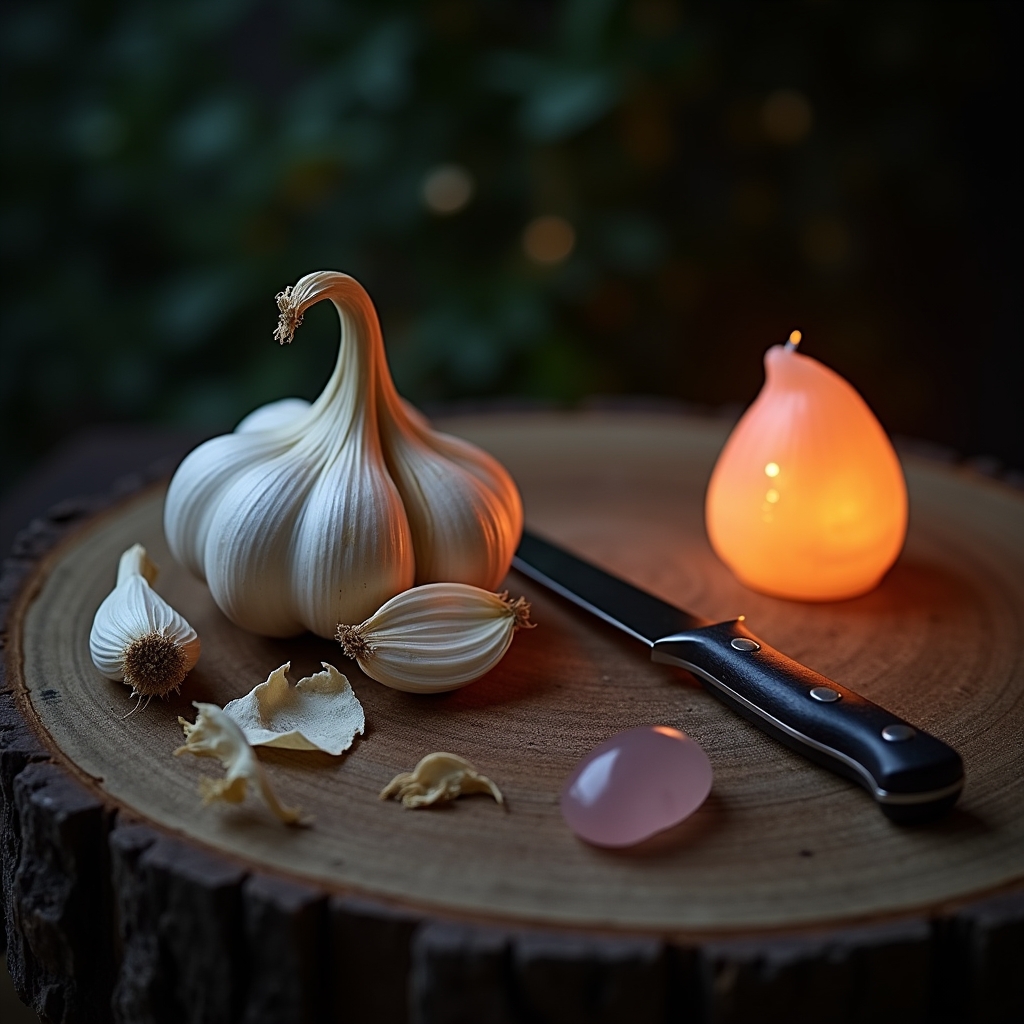
Garlic belongs to the kitchen in the most reassuring way. Its papery skin, its sharp scent released under the flat of a knife, the warmth it gives to oil before anything else is added—these are humble forms of protection. In folk memory, garlic has long stood at the threshold: warding, clearing, strengthening. Not through spectacle, but through presence.
On a day marked by opposing pulls, its medicine is symbolic and practical at once. Garlic teaches that clarity does not always arrive as revelation. Sometimes it arrives as a meal made properly, with attention. A clove rubbed into a bowl of toasted bread. A pot of soup beginning with garlic softened slowly in olive oil. The nervous system often receives steadiness through these ordinary rituals before the mind can name what is wrong.
There is meaning in its character. Pungent yet nourishing. Fierce in scent, generous in use. It carries the lesson that strength need not be polished to be beneficial. What protects us is not always delicate. Sometimes balance returns when we choose what is plain, warming, and rooted in the body.
A simple evening gesture can be enough:
- Peel one clove of garlic slowly, noticing its layers and scent.
- As it cooks, name one fear that has been pushing you into needless urgency.
- When you eat, name one clear action that does deserve your courage.
This is not about forcing symbolism onto dinner. It is about allowing the senses to help the spirit sort itself out. Fire transforms the clove. Fragrance fills the room. The sharpness mellows. So can the mood.
Always use herbs mindfully and check for any personal contraindications. Garlic is common and beloved, but even familiar plants deserve respect.
Rose quartz: presence, touch, and concrete listening
The cup cools on the windowsill while the morning light turns the glass pale as watered milk. In that quiet, rose quartz belongs less to ornament than to the hand itself. Its work is simple: it asks for contact. Not a grand revelation, only the honest noticing that comes when warm skin meets cool stone and the breath slows enough to hear what has been speaking all along.
This is where the tension of opposites becomes useful. Mars stirs the impulse to move, decide, cut through. The waning moon, fuller in memory than in promise, leans the other way. It draws the hand back from the door handle and asks what can be released before the next step is taken. Rose quartz helps when courage has become too hard-edged, when tenderness is mistaken for hesitation. It reminds the body that firmness and softness are not enemies. They are two hands carrying the same bowl.
Hold the stone while doing something ordinary: folding a shirt still scented with soap, rinsing a knife after chopping herbs, waiting for water to boil. Ask one precise question rather than many vague ones: Where am I protecting myself past the point of usefulness? Then listen concretely. The answer may arrive as a clenched jaw, a sudden memory, the urge to apologize, or the clear sense that one conversation needs fewer explanations and more truth.
If you keep garlic in the kitchen, notice its lesson too. A bulb of garlic is made of many enclosed cloves, each wrapped, each distinct, each part of one whole. Protection and nourishment live together in it. Crush one clove gently with the side of a knife and the fragrance rises at once—sharp, earthy, unmistakable. Some truths are like that. They only release their medicine when pressure is applied. If you cook with garlic today, let that scent mark a small act of discernment: what deserves to be spoken plainly, and what can be softened in warm oil and patience.
Always use herbs mindfully and check for any personal contraindications.
A threshold offering
There are evenings when the doorway feels like more than wood and hinge. Shoes gather at the mat, a draft moves along the floorboards, and the house seems to pause between what entered with you and what should not be carried farther. This is a good hour for a threshold offering—small, unadorned, and sincere.
Place a tiny bowl near the door with a pinch of salt, a peeled clove of garlic, and a few rosemary needles if you have them. No spectacle is needed. These are old companions of the hearth: cleansing, clarifying, protective in the language of kitchens and gardens. The point is not superstition for its own sake, but attention. The doorway becomes a place where contradiction can be sorted. Heat from the day on one side, rest on the other. Defensiveness outside, honesty inside. Urgency at the step, steadiness beyond it.
Stand there for a moment before crossing. Touch the frame with your fingertips. Name quietly what is leaving with the waning moon: the argument you have rehearsed too many times, the fear that disguises itself as control, the task that no longer belongs to you. Then name what may remain: clear boundaries, courage with roots, affection that does not beg to be understood before it is offered.
If you wish, leave the bowl overnight and return its contents to the earth in the morning, except salt, which is better disposed of respectfully rather than scattered where plants grow. Keep the gesture modest. Offerings become truer when they fit the real shape of a life.
Bringing this atmosphere into daily life without forcing it
Not every change asks for a ritual cloth or a candle. Much of what matters settles in through small, repeated acts: cracking a window before you answer, rinsing the cup before bed, setting the shoes straight at the door, choosing not to fill every silence. The waning moon favors this kind of adjustment. It does not demand a new identity by nightfall. It asks for subtraction, for integration, for the humility of noticing what already works and what keeps scraping against the grain.
Begin with one place where opposites tug at you in a visible way. Perhaps your speech runs ahead of your understanding. Perhaps you wait so long to act that resentment starts growing in the corners. Bring the matter down from thought into the body and the room. Open a window before answering a difficult message. Chop garlic and add it to a pot of beans or greens, letting its pungency soften as it cooks; remember that strength can become generous when given time and warmth. Put rose quartz in a pocket if touch helps you return to yourself, not as a charm against life, but as a reminder to stay reachable within it.
There is no need to dramatize release. A few grounded habits are enough:
- Pause at transitions—before entering home, before sending the reply, before saying yes.
- Choose one thing to finish rather than three things to begin.
- When irritation flares, place both feet on the floor and name the actual fear beneath it.
Spring fire can make everything feel urgent, bright, and unfinished all at once. Yet the wiser movement now may be selective rather than sweeping. Keep what has substance. Loosen your grip on what only creates noise. By evening, that may look like a cleared counter, a simpler conversation, soup fragrant with garlic, and the rare relief of not pushing the heart faster than it wants to go.